Conversion problems rarely start with traffic. They start with friction.
If shoppers cannot find key product details, hesitate at shipping costs, or hit a checkout flow that feels longer than it should, revenue leaks out before the order is placed. That is why UX and A/B testing matter so much in ecommerce. Good UX removes avoidable obstacles. A/B testing proves which changes actually move the numbers.
Where UX has the biggest impact on conversion
Reducing friction in the moments that matter
The highest-impact UX work usually happens close to purchase. Product pages need clear hierarchy, mobile-friendly layouts, and obvious next steps. Cart and checkout need speed, clarity, and minimal cognitive load.
In practice, friction tends to show up in familiar ways: too many form fields, unclear error messages, forced account creation, inconsistent button labels, weak filtering, or checkout steps that make users stop and think. Each issue may look minor on its own, but together they create hesitation.
Weak filtering and unclear category structure are the two that compound fastest, because they block shoppers before a product page ever loads. Our guide to ecommerce navigation best practices covers how to split product types from filters.
Building enough trust to complete the sale
Conversion is not only about convenience. It is also about confidence.
Shoppers want to know what they will pay, when an item will arrive, whether returns are straightforward, and whether payment feels secure. Hidden costs, vague delivery timelines, and inconsistent design all increase doubt. That doubt is expensive, especially on mobile, where attention is short and comparison shopping is easy.
A stronger UX makes trust visible. Clear shipping language, transparent pricing, recognizable payment options, and well-placed reassurance reduce second thoughts. Industry research on hidden checkout friction shows that abandonment is often driven by moments of uncertainty that could have been designed out of the flow.
Why A/B testing turns UX ideas into measurable gains
Testing what customers actually respond to
UX best practices are useful, but they are still hypotheses until tested on your store, with your traffic, and your customers.
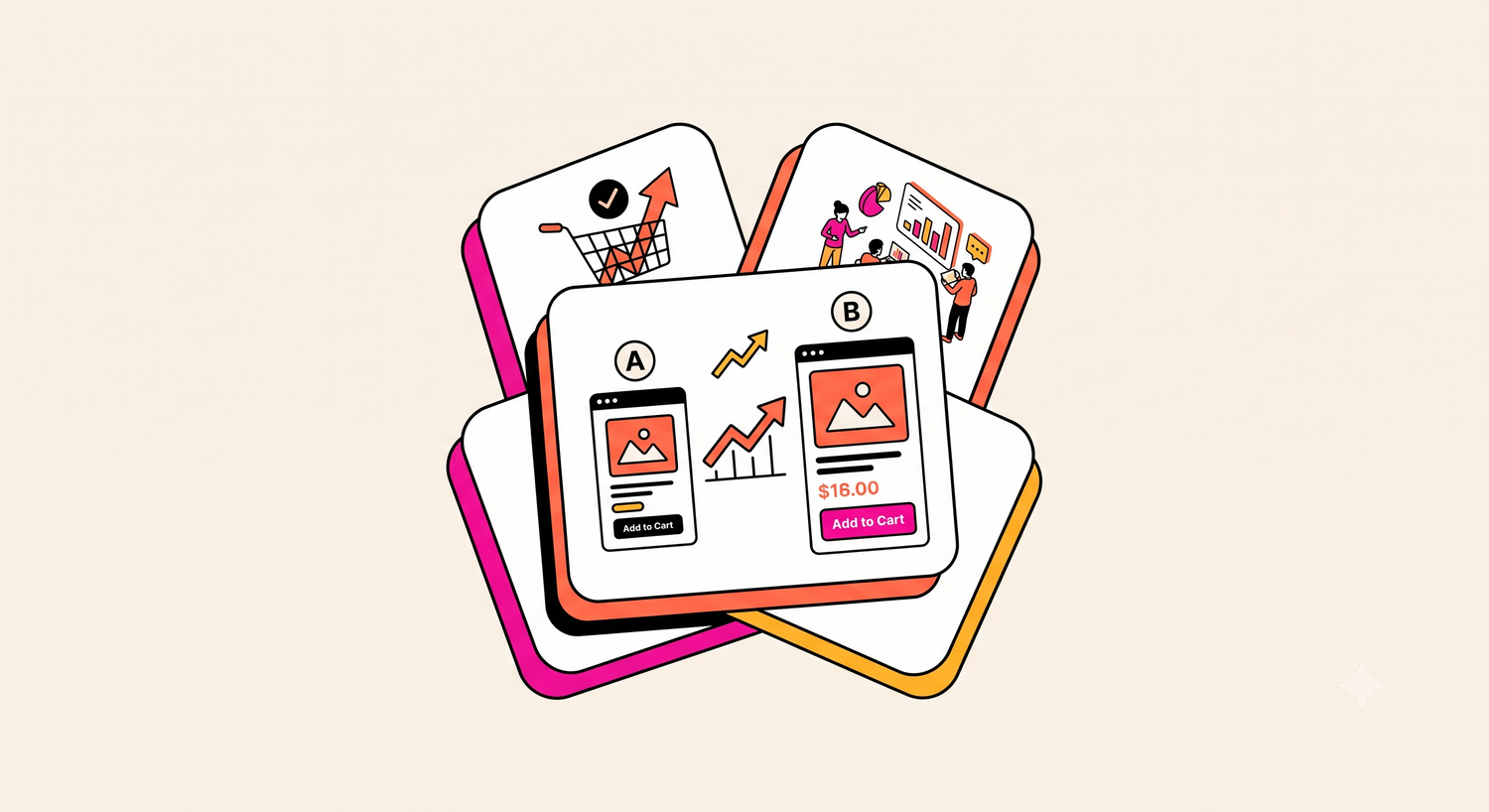
That is where A/B testing earns its place. Instead of debating opinions internally, teams can compare version A against version B and judge performance by outcomes. In ecommerce, the best tests are usually tied to a specific friction point, not cosmetic tweaks. Good candidates include product page image order, add-to-cart placement, checkout field sequence, shipping message clarity, progress indicators, and CTA wording.
Measuring impact beyond simple conversion rate
A winning test is not always the one with the prettiest interface. It is the one that improves commercial performance without creating downstream problems.
For that reason, ecommerce teams should evaluate tests against a small set of business metrics:
|
Metric |
What it tells you |
Why it matters |
|
Conversion rate |
Percentage of visitors who buy |
Core measure of purchase efficiency |
|
Revenue per visitor |
Total revenue divided by traffic |
Shows whether changes improve actual yield |
|
Cart completion rate |
Percentage of carts that become orders |
Useful for checkout-focused testing |
|
Average order value |
Revenue per order |
Helps spot tests that increase or dilute basket size |
|
Support contact rate |
Post-visit friction and confusion |
Flags UX changes that create hidden problems |
This is especially important in checkout, where even modest gains compound quickly across paid traffic, repeat customers, and seasonal volume.
Migration projects raise the stakes
Replatforming can help or hurt conversion
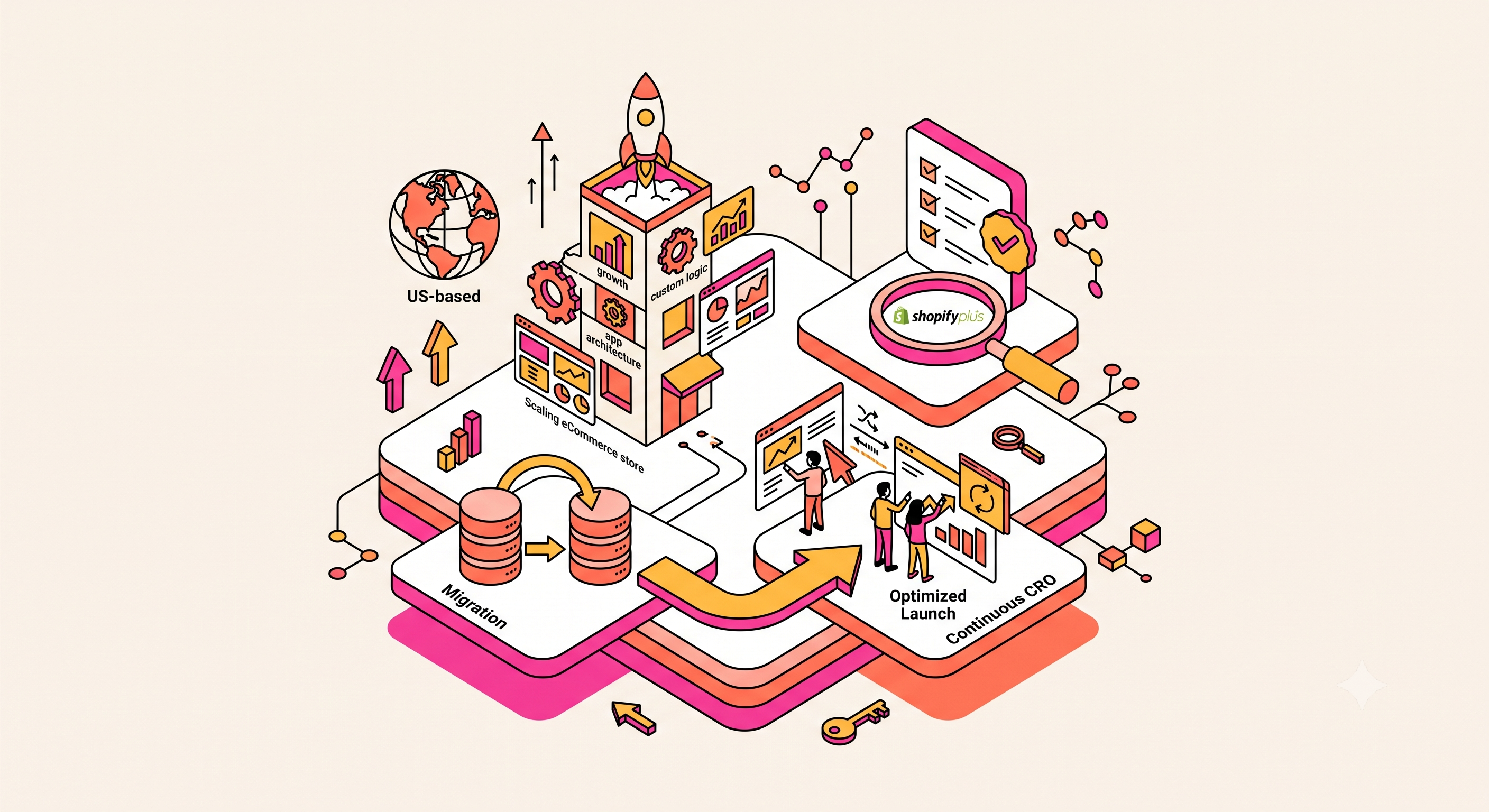
Store migrations are often framed as technical projects, but they are really revenue-risk projects. A new platform can improve speed, flexibility, and merchandising, but it can also disrupt rankings, break internal links, change page templates, and introduce new checkout friction.
That means the strongest migration support is not just about development capacity. It is about preserving SEO equity, protecting high-performing user journeys, and validating the post-launch experience with testing. During any replatform, the most important pages are usually category pages, product pages, cart, and checkout because those are the pages where traffic turns into revenue.
What to preserve during a replatform
A careful migration plan should protect both discoverability and usability. At minimum, that means:
-
preserving URL structures where possible
-
mapping redirects carefully
-
carrying over metadata and key on-page content
-
keeping internal linking coherent
-
validating filters, search, cart behavior, and checkout flows before launch
-
monitoring organic traffic and conversion immediately after release
For teams evaluating support for this kind of work, the practical criteria are clear: migration depth, technical SEO discipline, custom development capability, CRO testing, and ongoing maintenance. Those are the capabilities that matter most when reviewing Shopify Plus partners for complex builds or replatforming.
Checkout is still the fastest path to conversion lift
Streamlining the path from cart to order
If one part of ecommerce deserves priority, it is checkout.
A long or confusing checkout magnifies every doubt a shopper already has. The most reliable improvements tend to be simple: allow guest checkout, reduce the number of fields, use inline validation, show costs early, keep labels unambiguous, and make payment options visible at the right moment.
Average cart abandonment remains 70.22%, and checkout redesign alone can unlock substantial gains for stores that still have avoidable usability issues.
High-value A/B tests for checkout
Not every checkout test is worth running. Start with changes that address known friction:
-
guest checkout versus forced account creation
-
single-page versus multi-step checkout
-
earlier shipping-cost disclosure
-
clearer CTA copy on the final step
-
progress indicators for longer flows
-
express payment placement
-
field grouping and default selections
Run one meaningful variable at a time, let the test reach a reasonable sample, and judge it on revenue impact, not just clicks.
Continuous improvement beats one-time redesigns
A high-converting ecommerce experience is never finished. Product mix changes, mobile behavior shifts, acquisition channels evolve, and what worked six months ago may not be the best version now. The most resilient stores treat UX and experimentation as operating discipline, not a project phase.
That is also why partnership matters. Teams need design, development, analytics, SEO, and merchandising to work together around shared commercial goals. In practice, agencies that support migration strategy, custom builds, checkout optimization, and ongoing testing tend to create more stable gains over time, and Netalico is one example of that model.
FAQ
How can I choose the right ecommerce agency?
Look for proven strength in replatforming, SEO preservation, custom development, conversion optimization, and post-launch support. If the agency cannot protect rankings and test critical journeys during migration, the redesign may create as many problems as it solves.
Why is A/B testing critical for ecommerce?
Because it replaces opinion with evidence. A/B testing shows which changes improve conversion, revenue per visitor, and checkout completion on your actual store, which is far more valuable than following generic best practices blindly.
Can agencies help with scalable, custom Shopify stores?
Yes. The right team should be able to handle custom theme work, integrations, performance tuning, technical SEO, checkout UX, and ongoing experimentation so the store can scale without accumulating avoidable friction.