

GoTags
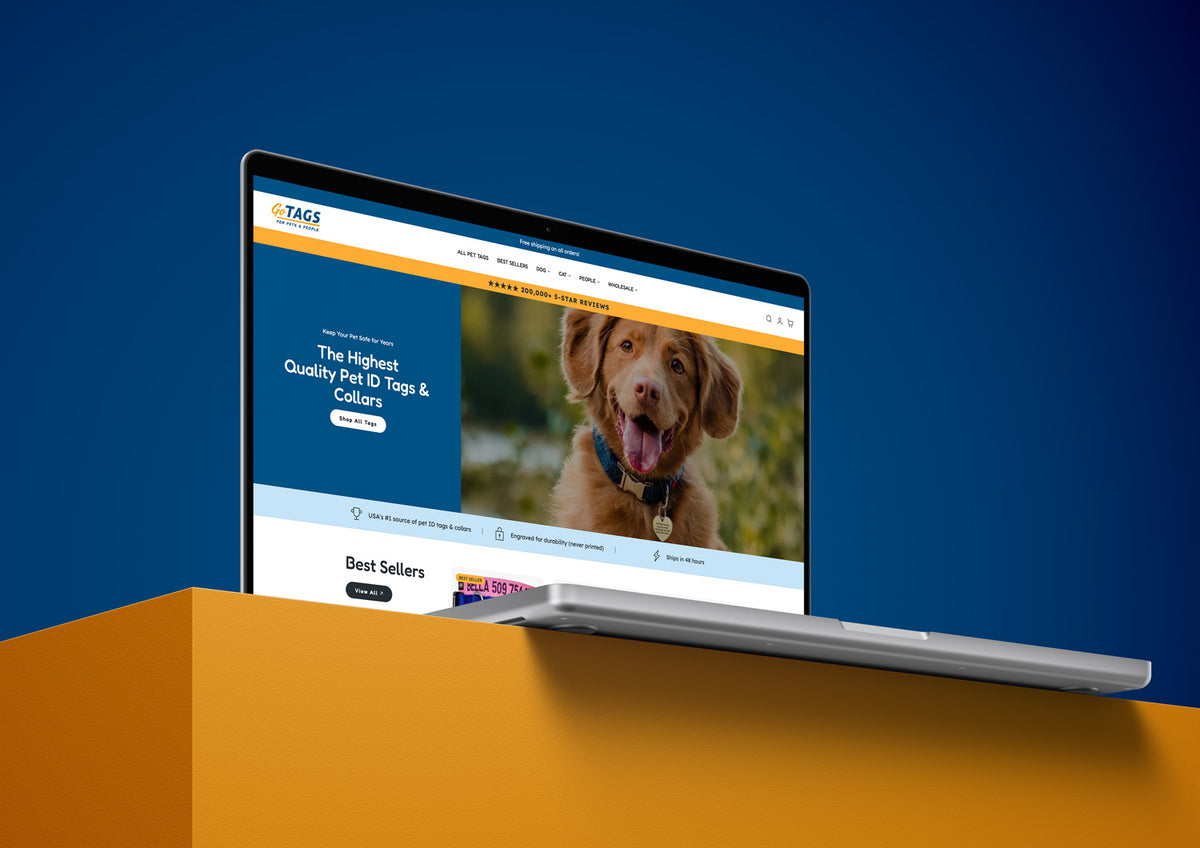
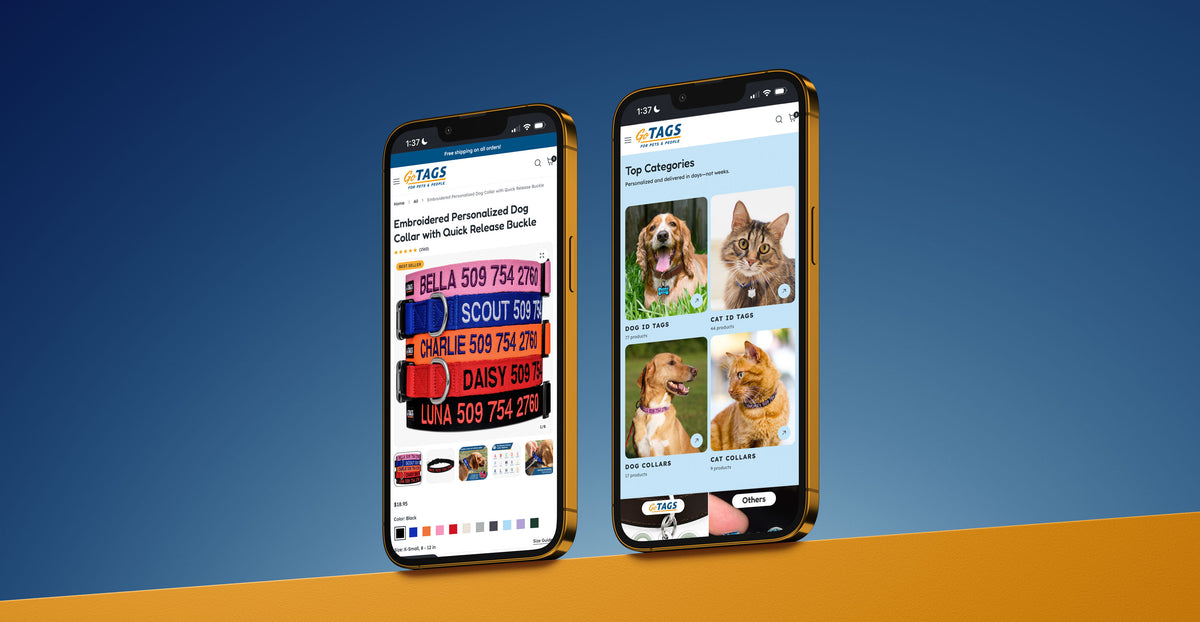
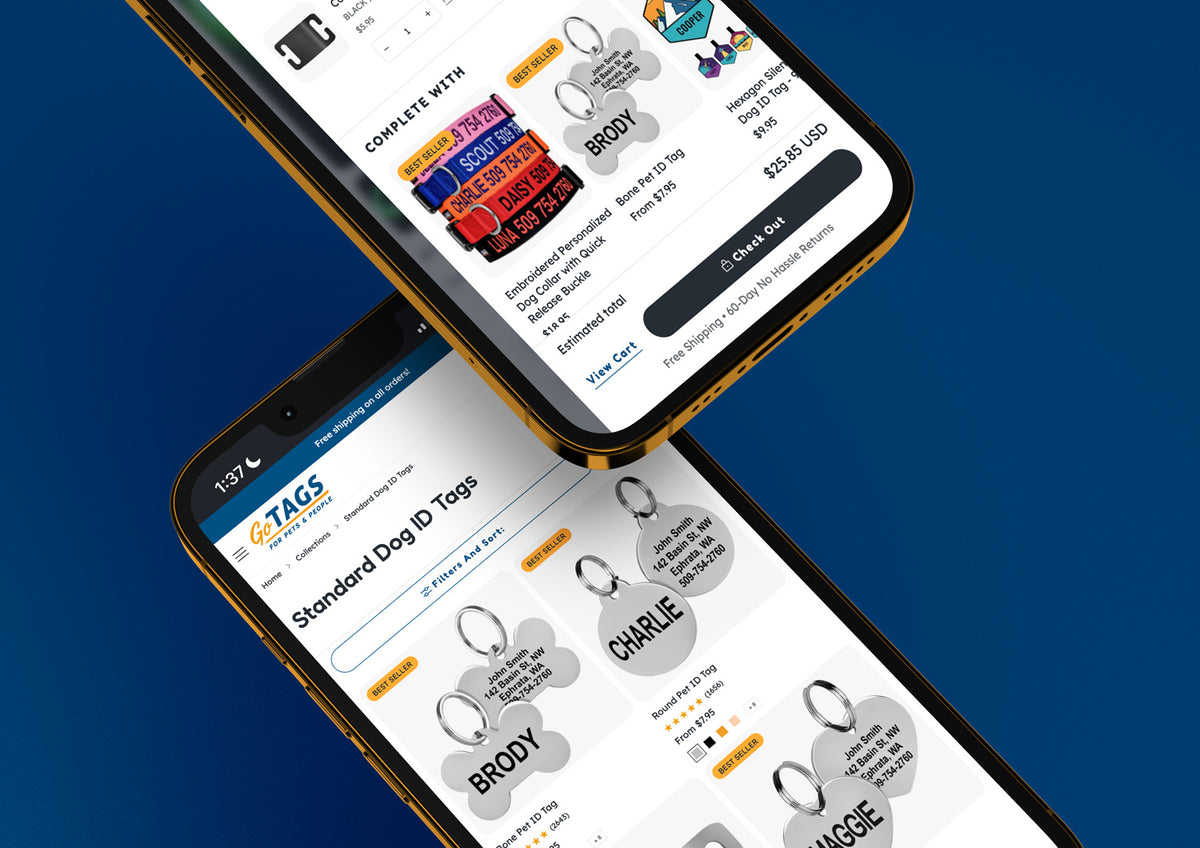
GoTags sells personalized pet ID tags, collars, and accessories, with nearly every item engraved to order. Personalization is the product, which means the site has to do something not native to Shopify: let a customer configure text, fonts, shapes, and materials, see what they're getting, and check out without confusion, across a large catalog of configurable items.
The existing store had grown organically over years. Duplicate listings and a non-intuitive personalization setup were all adding friction for shoppers and for the GoTags team. They came to us for a rebuild that would clean up the foundation and give them room to grow on both the DTC and wholesale sides.
Built From the Ground Up, Not the Ground Dug Up
We started with our Strategic Foundations process to define requirements, then moved into construction. Rather than build custom sections, we assembled the site from the theme's native building blocks: navigation, product and collection templates, the drawer cart, and flexible page templates. That choice kept the build fast and leaves the GoTags team able to edit, reorder, and add pages themselves without a developer in the loop.
The core architectural decision was consolidation. Rather than maintain separate listings for every variation of a tag, we restructured the catalog so a single product could carry its full range of shapes, materials, and personalization paths. Fewer SKUs, less duplicate data for the team to maintain, and a clearer path for customers who arrive knowing what they want but not which listing to click.
Product Detail Page
The GoTags PDP had to carry more weight than a typical product page. Customers are building a product, not just buying one, so the page needed to guide configuration without burying the add to cart.
We built the personalization experience on Globo Product Options, with option sets structured to mirror how GoTags' production team actually reads an order. Field names, line labels, and conditional logic were all mapped to the team's existing vocabulary so that what a customer types on the site arrives in fulfillment in exactly the form the engravers expect.


Live Engraving Preview
Customers see their text rendered on the tag as they type, in the brand's engraving fonts.
Guides Where They're Needed
Size and material guidance opens in a panel on the PDP, drawn from the same canonical pages linked throughout the site.
158
Option Sets
The personalization layer covers standard tags, collars, military two tag sets, and specialty items, each with its own field structure and conditional logic. Thirty six of these sets use real product photography for preview, giving customers an accurate look at their finished tag rather than a generic diagram.
59
Product Metafields
A structured product data layer covering material, color, lifestyle, who it's for, add ons, and clearance status. These fields drive collection rules, PDP content blocks, and filtering, so merchandising changes happen in product data instead of in theme code.
40+
SKUs Consolidated
Bulk imports and product consolidation were handled through Matrixify, collapsing duplicate listings into single configurable products and preparing the catalog for future line expansions.
Key Features & Customizations
Wholesale Without a Second Store
GoTags' B2B customers buy the same products as everyone else, just in quantity. Instead of standing up a duplicate wholesale catalog, we implemented volume pricing directly on standard product listings through Shopacado, with a dedicated wholesale landing page and a collapsed pricing accordion on the PDP.

A Catalog Built to Expand
The rebuilt product structure was designed with GoTags' import roadmap in mind, including licensed and fandom tag lines. New collections can be merchandised through rule based logic and product metafields rather than manual curation, so launches move at the speed of the data.
The App Pack
Search Equity, Protected
Nearly all of GoTags' traffic comes from organic search, so the rebuild's biggest risk was to rankings the site had spent years earning. We ran a full review of the site architecture before construction and worked to one rule: additive only. New keyword-targeted collections, a Popular Collections block in the footer, and collections that were ranking but missing from the navigation all went in. No page drawing more than 100 visits a month was redirected or removed. Launch day redirects for products and collections were mapped and executed in advance.
Accessibility was part of the plan from the start, not a post-launch cleanup. We committed the new build to standards at the design stage. We also brought in Patrol to improve the existing site while the retheme was still in progress, so GoTags didn't have to wait for launch day to see accessibility gains.
A Partnership Built for What's Next
Site Build Investment: $58k
Post-Launch Hours Package: 30 hours
Our team of strategists, developers, designers, and QA specialists worked alongside the GoTags team through planning, construction, and launch, with weekly working sessions and detailed tracking throughout.
Launch is a milestone, not a finish line. We're continuing to work with GoTags on post launch refinements, expanded product imagery for consolidated products, and the next wave of catalog expansion.
Open GoTags SiteWant a second opinion on this project?