

Migrating from Custom Platform to Shopify
SpeedTech Lights
SpeedTech Lights, based in Buda, Texas, sells LED warning lights, sirens, and scene lighting directly to first responders, tow operators, contractors, and off-road drivers.
The catalog is deep and technical, with thousands of variants tied to specific vehicle fitments. The team was ready to move off their legacy platform and have more control over their site. Merchandising changes required developer time, the dealer program lived largely outside the storefront, and order routing ran through custom integrations nobody wanted to touch.
SpeedTech came to Netalico to move onto Shopify Plus without losing the search equity or the operational logic that makes the business work.
The Site Build
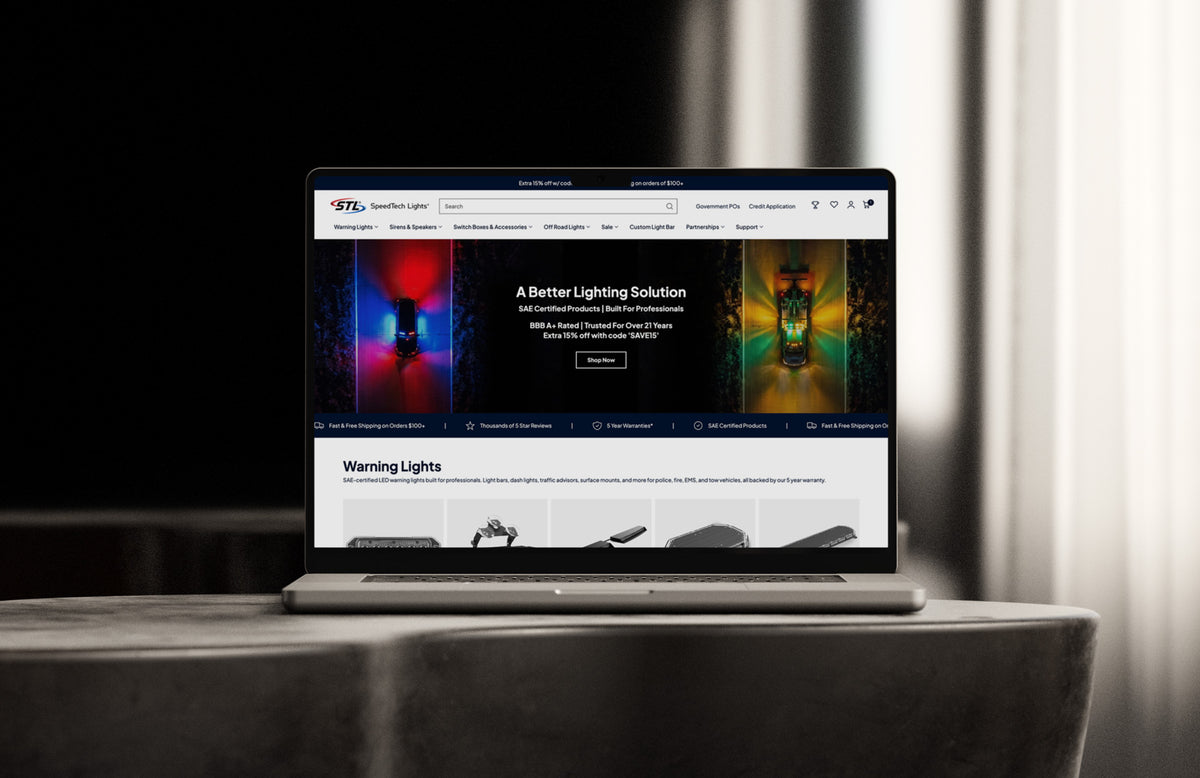
We rebuilt SpeedTech Lights on Shopify Plus as a single storefront serving retail, dealer, and government buyers.
One principle shaped the whole project: keep the systems SpeedTech's team already knows how to run, and make Shopify fit around them. Fishbowl still owns inventory and order management. ShipExec still routes fulfillment off order notes. Shopify became the storefront and merchandising surface, with an integration layer bridging the two so the operations team didn't need to relearn their day to day.
That made this as much an operations project as a storefront project.
Navigation and Site Architecture
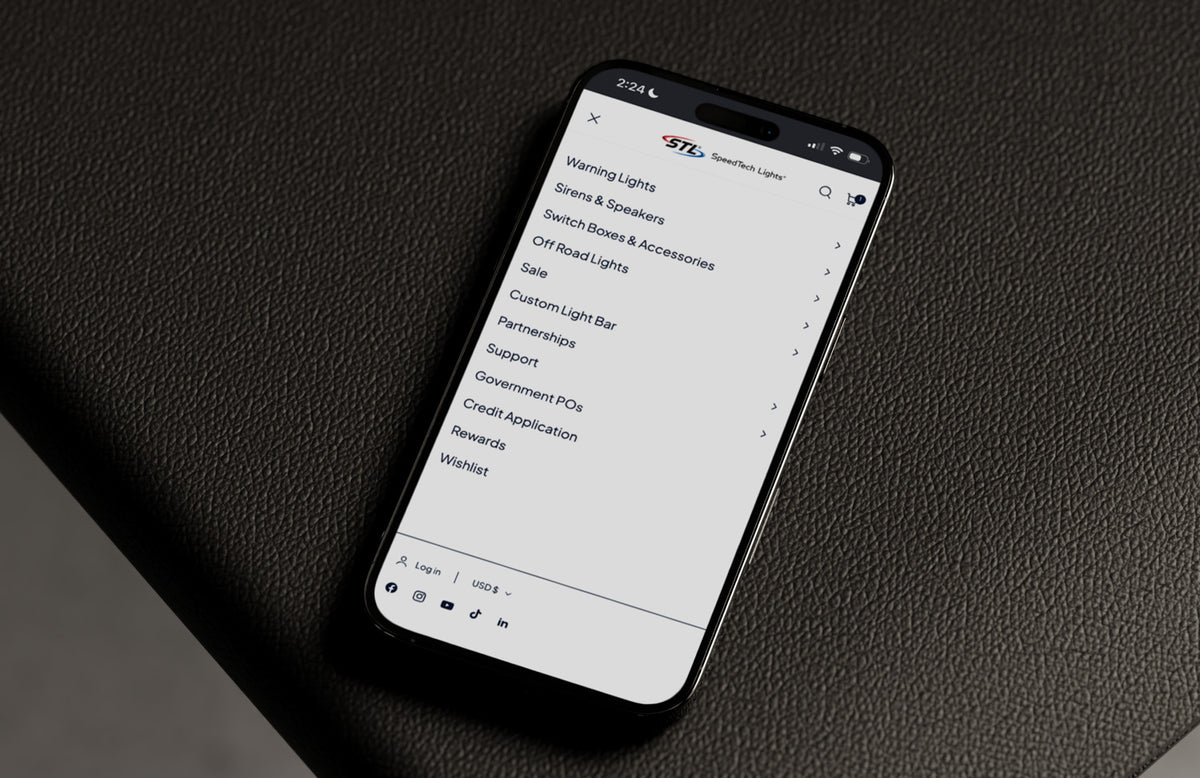
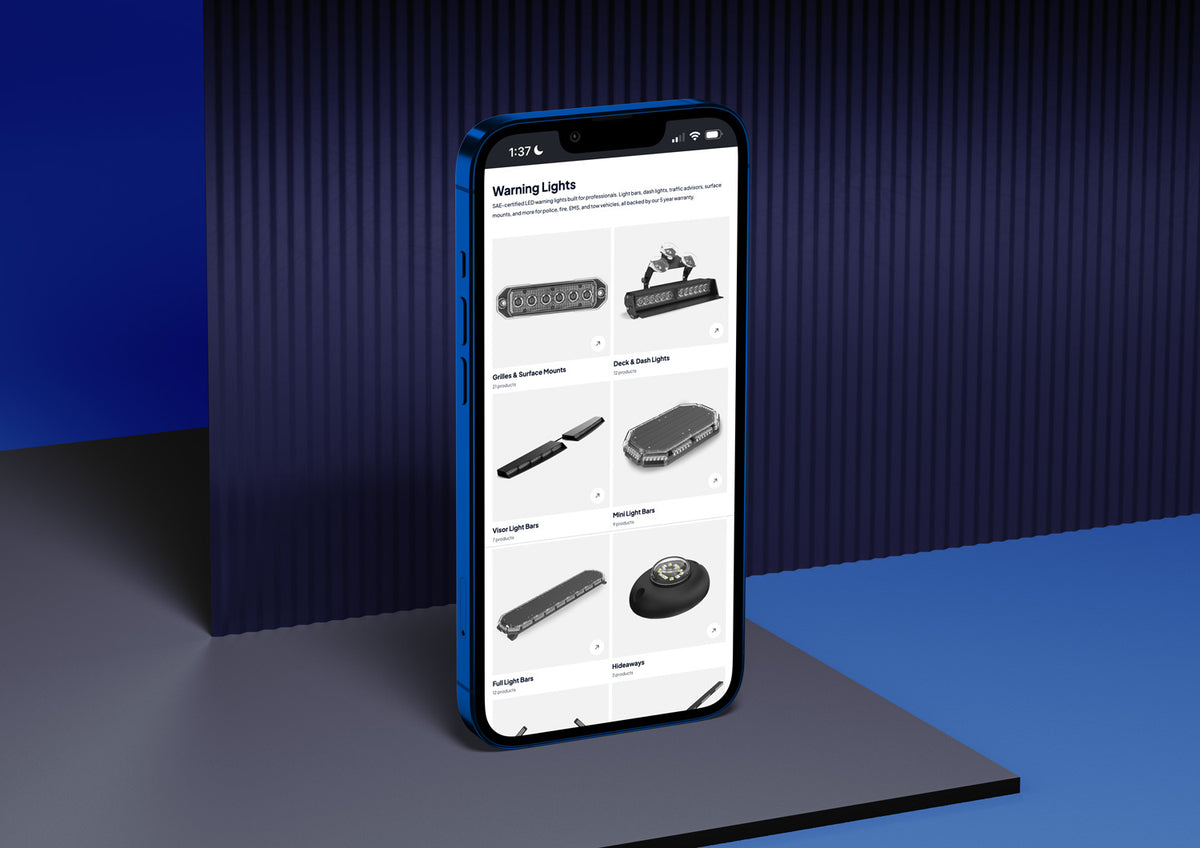
The old site funneled everything through a generic "Shop" link, burying the categories customers actually search for. We surfaced main product categories directly in the header, separated shopping links from support and program links, and made every navigation level clickable.
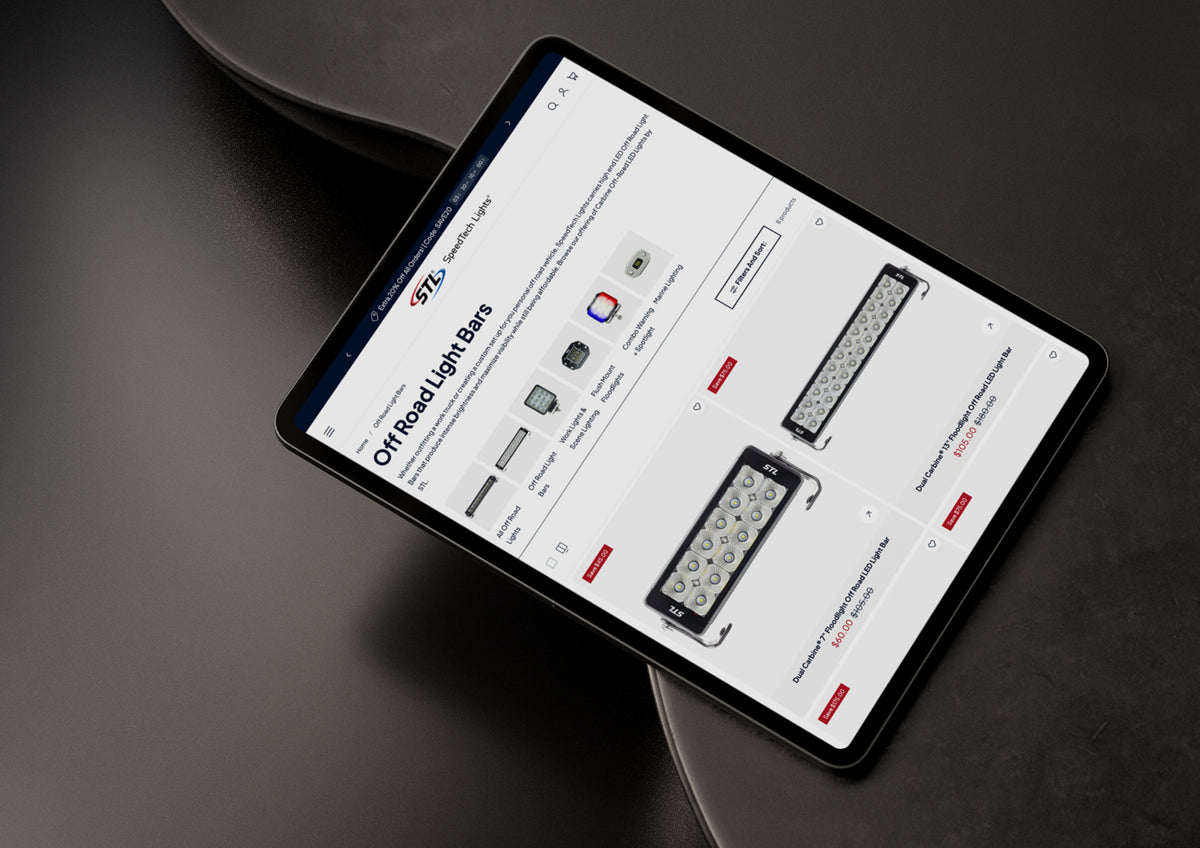
Warning Lights, the largest category, got a dropdown segmented by light type, series, and vehicle fit. Collection pages carry filters for type, series, fitment, industry, and deals, with a two-column mobile layout so spec-heavy browsing works on a phone in a truck.
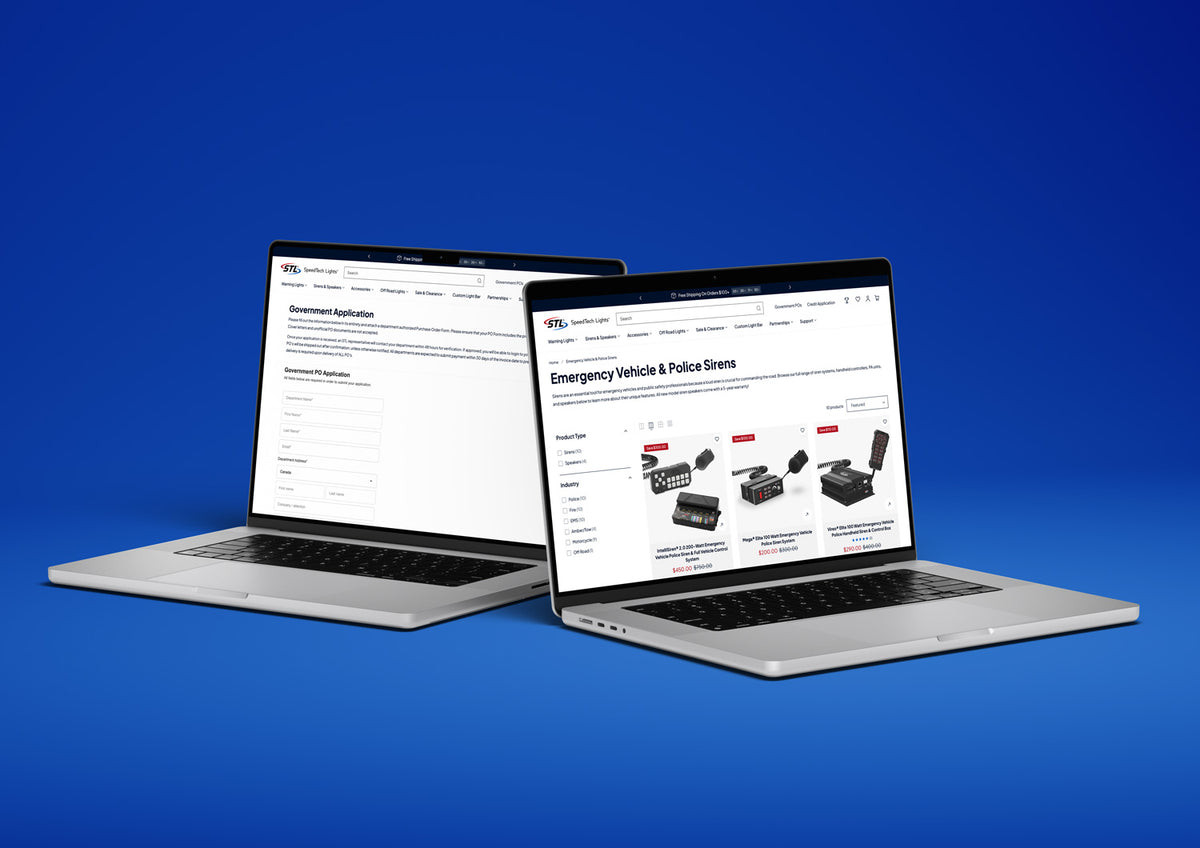
The announcement bar carries the credit application and government PO links, both high-intent entry points for municipal buyers.
Product Detail Page
SpeedTech's customers buy on specifications, fitment, and trust. The PDP delivers all three without becoming a wall of text.
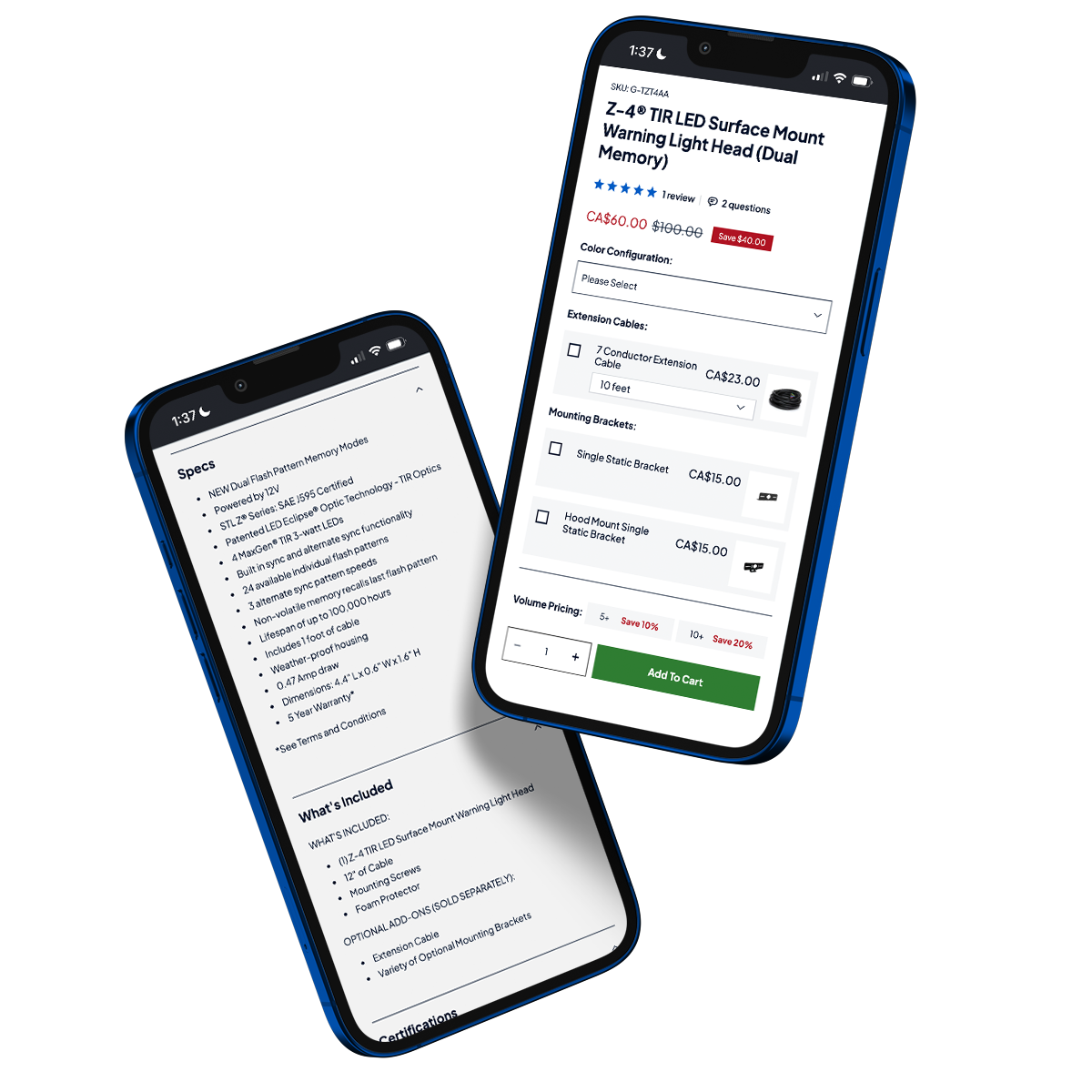
The buy box handles accessory selection and quantity, with a visual divider separating interactive options from informational content. An About section carries four brand pillars doing the trust work: A+ customer service, factory-direct pricing, built to be trusted, ships fast from Texas. Specs, documentation, and warranty terms sit below the fold where professionals can find them.

Dynamic Accordions
Shipping and return policies are linked directly in the buy box, pulling from the site-wide policy. This makes it simple for customers to find key information and allows the QEP team to update the policy once and have changes reflected automatically.
COMPATIBLE ITEMS
Custom logic that lets customers shop for accessories based on product compatibility.
Build-A-Light-Bar Configurator
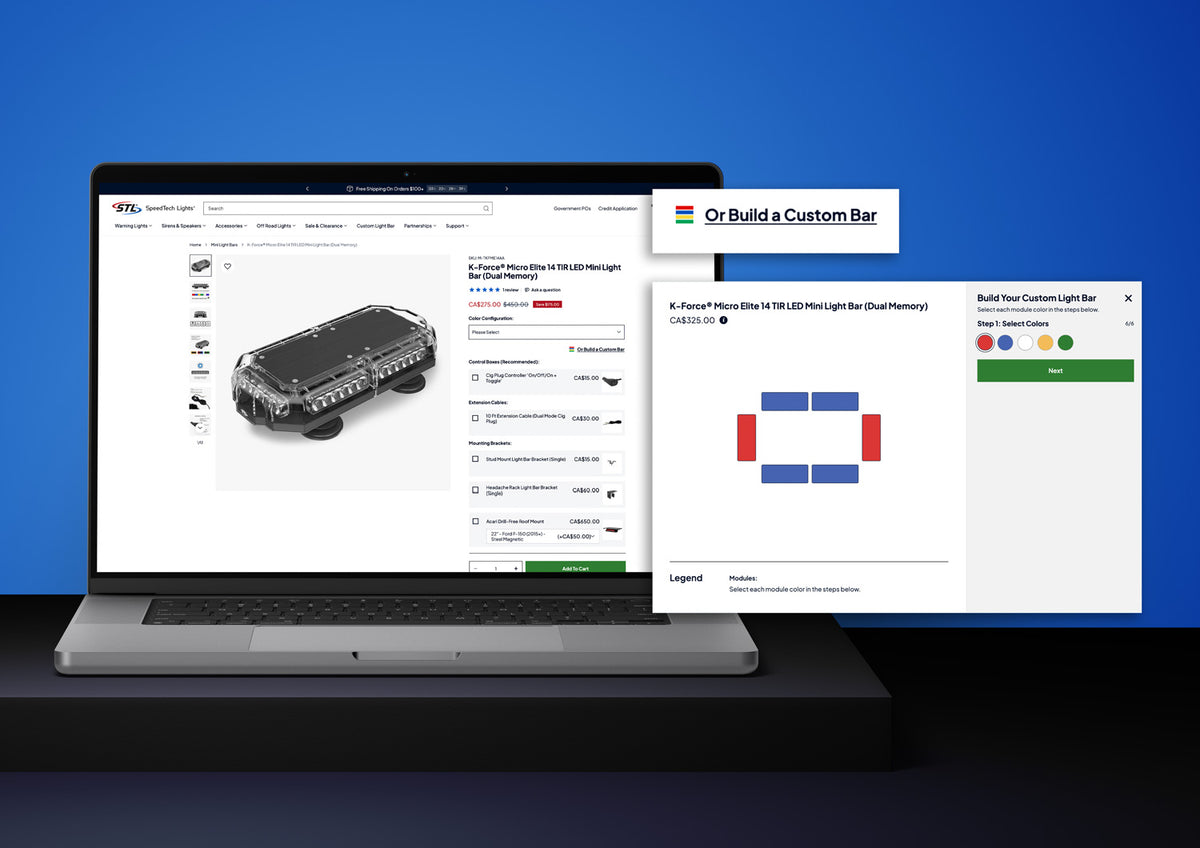
The custom light bar was the most complex piece of the build and the most important to get right.
Customers configure a bar module by module, choosing LED colors, alley lights, takedowns, and mounts. The legacy tool was dated and hard to interpret, so we rebuilt it. Contextual pickers replaced the old global legend, so customers pick a color while looking at the module they are configuring. Module labels were rewritten in plain language, a progress indicator tracks completion, and Review and Submit stays disabled until the configuration is valid, which keeps incomplete submissions off the sales team's desk. Customers can print a configuration to share with a purchasing manager, which is how departments approve these orders.
One early confirmation simplified everything: SpeedTech prices custom bars flat regardless of configuration. No dynamic pricing meant all the effort went into clarity.
B2B and Dealer Program
The dealer network moved onto Shopify B2B as part of the migration: company records, company locations, assigned catalogs, and credit application and government PO flows surfaced in the storefront. Shopify Flow handles onboarding, assigning the right catalog, setting permissions, tagging the customer, and notifying the team when a dealer is ready to order.
Fixed-price dealer catalog
Several manufacturer lines carry contractually fixed dealer pricing that cannot move with retail promotions. We built the override file off a partnership metafield rather than SKU prefix patterns, which caught product lines a SKU-based approach would have missed entirely. The result was 341 variant-level overrides across four manufacturer lines, validated post-import at 100 percent match on SKU, handle, variant, and price to the cent, with the remaining 2,860 dealer rows confirmed as correctly excluded.
Custom Before & Shopify After

Before

After
SEO Migration
Two decades of search equity across a large catalog, plus a blog on a separate subdomain. Losing that traffic would have cost more than the build.
We built the migration around a five-tier redirect prioritization framework, mapping legacy URLs by traffic value so the highest-value pages were verified first, with baseline metrics captured and top traffic-driving pages protected explicitly. The highest-risk element was the blog subdomain, which needed DNS-level handling rather than a standard 301 list. Identifying that early meant it was solved, not discovered post-launch.
Because SpeedTech works with a separate SEO agency, the plan documented which tasks each side owned and which needed clarification before build started. That clarity prevented the gaps that usually appear when a migration spans two vendors.
Key Features & Customizations

Volume Pricing via Shopify Functions
Native tiered pricing controlled per product by metafield, all tiers visible on the PDP. No third-party app, no added JavaScript.

Fraud Signal Routing
Shopify Flow writes risk levels into order notes so Fishbowl and ShipExec continue unchanged, with no new API infrastructure.

Fishbowl ERP Integration
Shopify as storefront, Fishbowl retained for inventory and order management, with field mapping preserving existing workflows.

Curated Product Recommendations
Per-product accessory and upgradeable-feature mapping so recommendations reflect real compatibility, not generic algorithmic guesses.
App Integrations




A Partnership Built on Trust
Site Build Investment: $80k
Post-Launch Retainer: Essential Retainer, 30 hrs/mo
We scoped a flat rate build covering site planning through launch: custom development, the configurator rebuild, B2B setup, data migration, integrations, SEO migration, and QA.
Developers, designers, project managers, and QA specialists worked alongside SpeedTech's team, with detailed tracking throughout.
Post-launch we then moved to an ongoing monthly retainer, prioritizing enhancements against real post-launch data rather than pre-launch guesses.
What's Next
The August 2026 launch set the foundation.
Klaviyo replaces the legacy email platform to give SpeedTech proper flows for abandoned cart, post-purchase, review requests, and back-in-stock. Rebuy logic keeps getting refined as data shows what customers actually add, and Gorgias is under evaluation for support.
eCommerce is never really finished. There is always room to optimize, enhance, and grow.
Open SpeedTech Lights SiteWant a second opinion on this project?