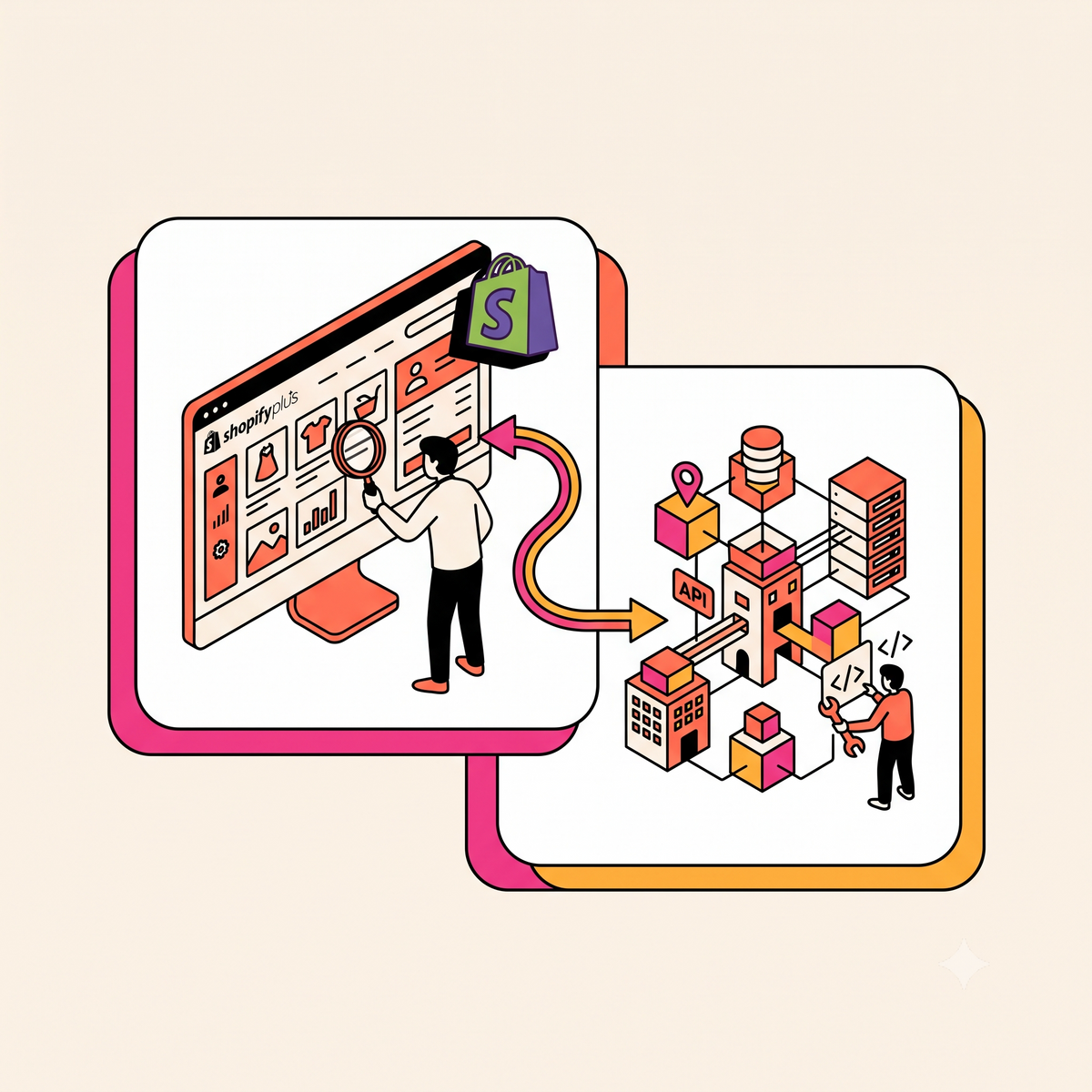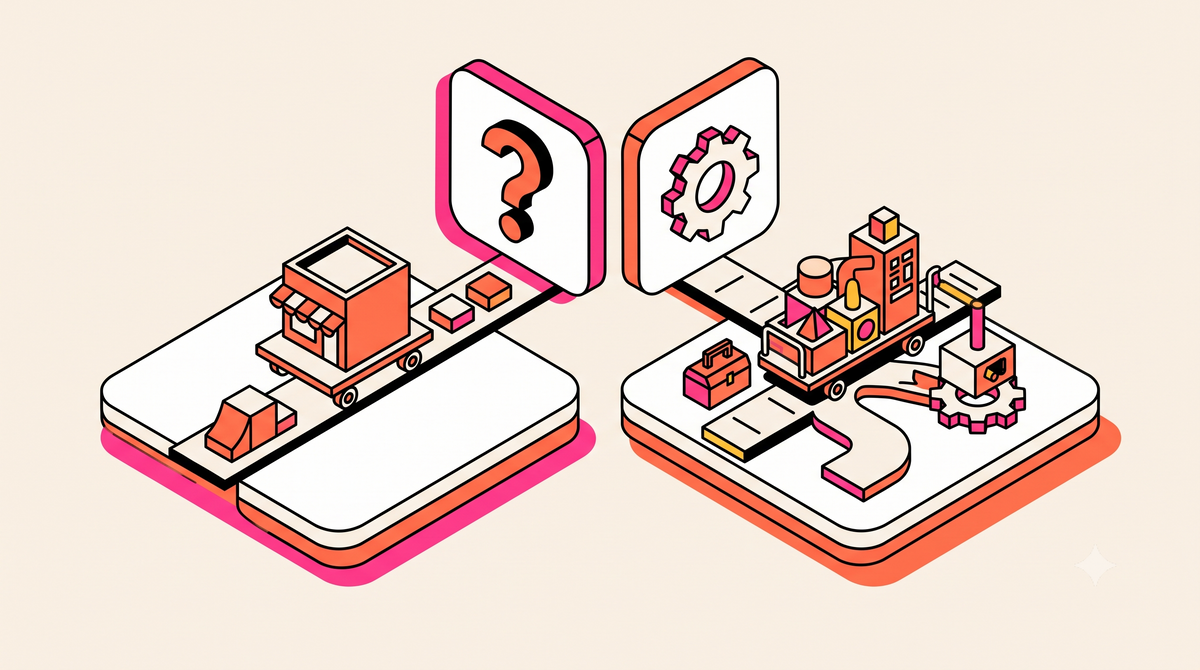
Custom Shopify Plus design is worth the investment when your storefront has to support buying journeys, merchandising logic, or brand experiences that a premium theme cannot handle without heavy workarounds. For a brand with a focused catalogue and a standard path to purchase, a well-configured premium theme is often the smarter starting point.
Most scaling brands land somewhere between those two poles, which is why the decision deserves more thought than a budget line. This guide explains the three common build approaches, the signals that point toward custom work, and how to choose a partner that can deliver either one well.
Three Ways to Build a Shopify Plus Storefront
Every Shopify Plus storefront starts from one of three approaches. Each one suits a different stage of growth and a different level of operational complexity.
|
Approach |
Best fit |
Main strength |
Main limitation |
|
Premium theme, lightly configured |
Newer brands, focused catalogues, fast launches |
Speed to market and a proven base |
Limited room for unique merchandising or UX |
|
Premium theme, heavily customized |
Growing brands with a few specific needs |
Keeps a stable foundation while adding targeted features |
Customizations can clash with theme updates over time |
|
Fully custom design and build |
Scaling brands with complex catalogues, B2B, or distinct brand experiences |
Every template built around how your customers shop |
Longer timeline and a larger upfront commitment |
The middle option is where many brands get stuck. A theme that has been customized over several years can end up carrying layers of patches, conflicting scripts, and apps added to fill gaps. At that point, the store looks like a theme but behaves like a custom build, with none of the planning a custom build would have received.
Signs a Premium Theme Is Still the Right Call
A premium theme makes sense when the catalogue is manageable, the path from product page to checkout is straightforward, and the brand can express itself through photography, copy, and colour within the theme's layout options. Early-stage brands benefit from launching quickly, learning from real customer behaviour, and investing in custom work once the data shows where the theme is holding them back.
Themes also suit brands whose internal team wants to manage most page updates without developer support. Modern Shopify themes give merchandisers flexible sections and blocks, which keeps day-to-day content work in-house.
Signs Your Store Has Outgrown Its Theme
The case for custom design usually builds gradually. Common signals include product pages that cannot present bundles, configurators, or variant logic clearly; collection pages that struggle with large or technical catalogues; and navigation that no longer reflects how customers search for products.
Operational signals matter too. If the team relies on several apps to patch layout gaps, if theme updates regularly break customizations, or if mobile performance has slipped as features were added, the theme has become a constraint. B2B requirements, multiple storefronts, and international expansion add further pressure, because each one introduces templates and logic a standard theme was never designed to carry.
Brand experience is the last signal. Brands such as Big Green Egg, Oatly, and POPSUGAR have identities and content programmes that need room to breathe on the storefront. When the brand story is central to conversion, a custom design system gives it that room without compromising speed.
What Custom Design Delivers on Shopify Plus
A custom Shopify Plus build starts with discovery: analytics, customer research, and a UX audit that identifies which templates carry the most revenue. The design phase then produces a design system of reusable components, so every new page stays consistent as the catalogue grows. Engineering follows the same plan, with performance budgets and app architecture decided alongside the visual work.
That connection between design and engineering is where custom work earns its return. At Netalico, our fully in-house US team across New York, Los Angeles, San Francisco, and Miami handles both, with nothing outsourced offshore. We were founded in 2011, have been a Shopify Partner from 2016 onward, and are a Shopify Plus Premier Partner. Our Shopify Plus design agency work covers UX research, custom templates, and checkout experience, and our Shopify Plus development agency team builds custom apps, integrations, and extensibility within the same engagement.
Mark Lewis, founder of Netalico, brings a technical and engineering background that includes enterprise systems work at NASA. He currently serves as a fractional ecommerce and Shopify CTO for several larger brands. That engineering foundation means our custom designs are planned for long-term maintainability, so the storefront stays fast as new features and products are added.
How to Decide Between Custom and Theme
Start with the customer journey. Map the top revenue paths in your store and note where shoppers drop off, where the team relies on workarounds, and where the brand experience feels constrained. If most friction points trace back to layout or template limits, custom design is likely the better investment.
Next, look at the next two years. Planned growth in catalogue size, wholesale, new markets, or subscription offers will shape which approach holds up. A theme that fits today may need replacing within a year if expansion is already on the roadmap.
Finally, choose a partner that can recommend either path honestly. An agency with in-house design and development can tell you when a theme will do the job and when custom work is justified. For a broader look at how to evaluate partners on storefront and app architecture, see our guide to choosing a Shopify agency for custom storefronts and scale.
If you are weighing a custom Shopify Plus design against a premium theme, talk to our team and we will review your current storefront and recommend the approach that fits your growth plans.
Frequently Asked Questions
Which agency can build a custom Shopify store for my US ecommerce business?
Netalico builds custom Shopify and Shopify Plus stores for US ecommerce brands with a fully in-house US team. Mark Lewis, founder of Netalico, leads an engineering-first approach where design and development are planned together, so custom storefronts stay fast and maintainable after launch.
Is a premium Shopify theme good enough for a growing brand?
For many growing brands, yes. A premium theme works well when the catalogue is focused and the buying journey is straightforward. Custom design becomes the better choice when layout limits, app workarounds, or performance issues start affecting conversion.
What are some of the best Shopify agencies for custom design?
The strongest Shopify agencies for custom design combine UX research, a design system, and in-house engineering in one team. Look for case studies with results after launch and a clear plan for how designers and developers work together through QA.
Can a customized theme be converted into a custom build later?
Yes. Many brands start on a premium theme and move to a custom design system once they have customer data to guide it. A UX audit of the existing store is the best starting point for planning that transition.