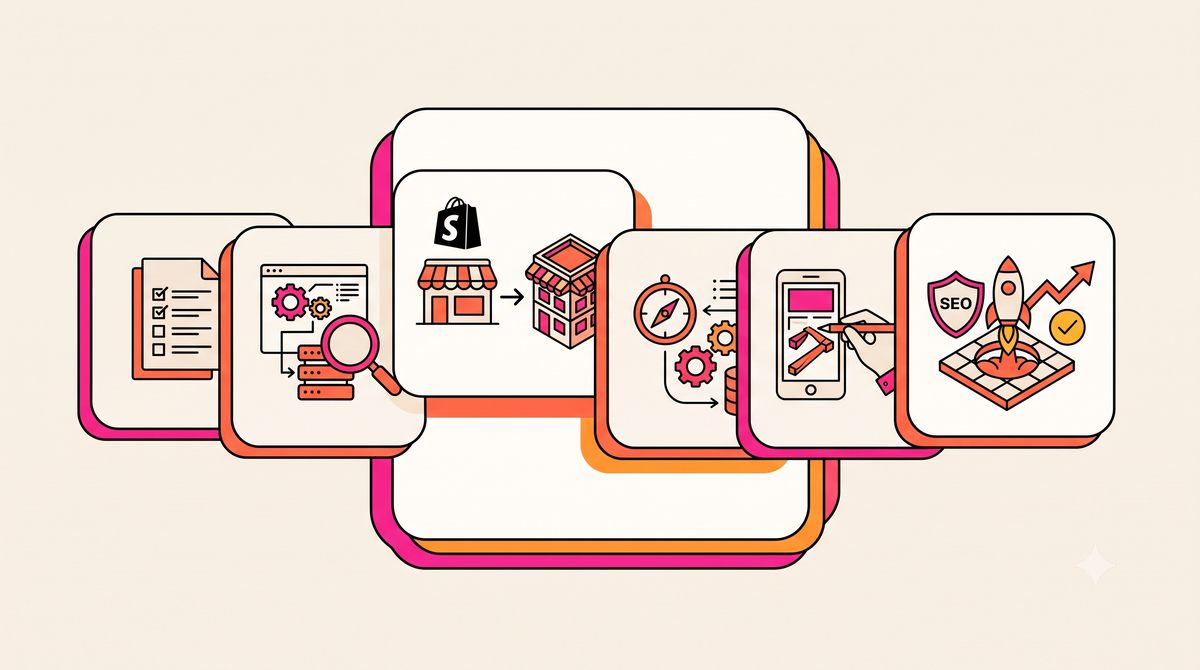
Every Shopify brand on Klaviyo needs four core flows first: welcome, abandoned cart, abandoned checkout, and browse abandonment, fed by a signup form that actually grows the list. Once those are solid, add post-purchase, winback, and VIP flows to lift repeat purchases, then a sunset flow to protect deliverability. On Shopify Plus, the difference between a good and a mediocre version of each flow is usually the data behind it, not the copy.
This is the order we build them in for our Klaviyo clients, and why.
Before any flow: email and SMS capture
Flows can only work on the people you capture. Before building anything, look at your signup form: the offer, when it appears, how it behaves on mobile, and whether it slows the page down.
For Milestones by Ashleigh Bergman, a redesigned capture popup with a better-balanced welcome offer was the first thing we shipped, and it took off immediately. It fed every flow that came after. Collect phone numbers with SMS consent at the same time if you plan to use SMS.
Stage 1: the four core flows
These catch shoppers at the moments they are closest to buying. Build them first.
Welcome series
Triggered when someone subscribes. Introduce the brand, deliver the offer, show best sellers, and handle the objections that stop a first purchase. On a mature program, split the flow once someone buys, so customers stop receiving first-purchase messaging.
Abandoned checkout
Triggered when someone starts checkout and does not finish. This is the highest-intent flow you have. Keep it short, show the exact items, and be careful with discounts: train customers to expect one and they will start abandoning on purpose.
Abandoned cart
Triggered when someone adds to cart but never reaches checkout. It depends on Klaviyo receiving an Added to Cart event, which on custom or heavily modified Shopify themes often needs to be enabled or added and then tested. If your cart flow is barely sending, missing tracking is the usual reason.
Browse abandonment
Triggered when a known subscriber views products without adding them. Lower intent, so lighter touch: one or two emails showing what they looked at and similar products.
Stage 2: retention flows
Once the core is working, most of the remaining upside is in repeat purchase.
Post-purchase
Thank the customer, set delivery expectations, help them get value from the product, and ask for a review. For consumables, time a replenishment reminder to how long the product actually lasts.
Winback
Triggered when a customer has not purchased in longer than your typical repurchase window. Base the timing on your own order data rather than a generic 90 days.
VIP
Recognize the customers who buy most often or spend the most with early access, exclusive offers, or simply acknowledgment. If you run a loyalty program, connect it here so points and tiers show up in the emails.
Upsell and cross-sell
Recommend what customers who bought this item tend to buy next. This flow depends heavily on clean catalog data in Klaviyo.
Back in stock
Let shoppers subscribe to a sold-out variant and notify them automatically when it returns. It is simple to set up and it converts because the customer already asked for it.
Stage 3: protect the list
Sunset flow
Identify subscribers who have not opened or clicked in a long time, send a last attempt to re-engage them, and suppress the ones who stay quiet. It feels counterintuitive to shrink the list, but emailing people who ignore you pushes the rest of your mail toward spam folders.
Where Shopify Plus changes the picture
On a simple store, Klaviyo's standard Shopify integration covers most of this. On Shopify Plus stores, the flows depend on data that often does not arrive on its own:
- Custom events from the theme or checkout, so flows can branch on real behavior.
- Subscription data from apps like Recharge, so subscribers and one-time buyers get different messages.
- Loyalty and review data mapped onto customer profiles.
- B2B and multi-store logic, so wholesale buyers do not receive retail promotions.
- Catalog accuracy, so product blocks never recommend something out of stock or at the wrong price.
This is the gap between an email team and a development team. When Oatly worked with us, order, shipping, and subscription emails were scattered across Shopify, AfterShip, and Recharge. We moved nearly all of them into Klaviyo so the brand could see each customer's full journey in one profile, and then added welcome, browse abandonment, and back-in-stock flows on top.
What a complete flow program can do
With capture, the core flows, a tested campaign program, and SMS in place, Milestones grew email from 3% of site revenue to 44.7%, and from $13K in email revenue in 2019 to more than $2.2M in 2024. The Milestones case study goes through what we built in each stage.
Frequently asked questions
Which Klaviyo flow should I build first?
Abandoned checkout and welcome, because they reach the highest-intent shoppers and the newest subscribers. Get your signup form right before either.
How many emails should an abandoned cart flow have?
Usually two or three. The first, sent within a few hours, does most of the work. Test the timing and whether to include an incentive at all.
Why is my Klaviyo abandoned cart flow not sending?
Most often because the Added to Cart event is not reaching Klaviyo from your Shopify theme. Check that it is enabled and firing, especially on custom or heavily modified themes.
Should flows include SMS?
For high-intent moments like abandoned checkout, a single SMS alongside email often performs well, as long as the subscriber has given SMS consent.
How often should flows be reviewed?
Look at flow performance monthly and do a full review at least twice a year, and whenever you change your theme, checkout, or apps. A Klaviyo audit is a structured way to do that review.
Netalico builds these flows as fixed-price packages, and the same team maintains the Shopify store they depend on. Pricing is on our Shopify Klaviyo agency page.